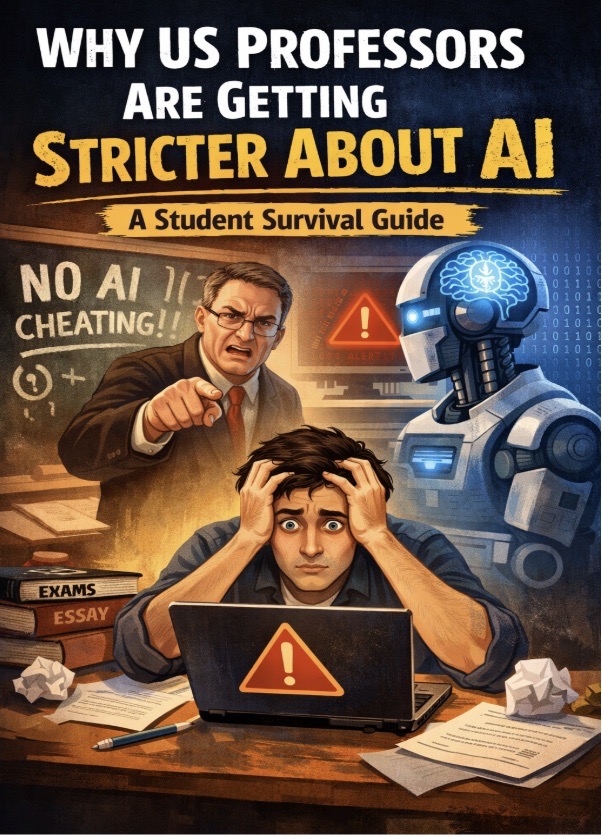
The landscape of American higher education is undergoing its most significant transformation since the invention of the internet. As artificial intelligence tools become integrated into daily life the ivory towers of academia are reacting with a mixture of caution and strict enforcement. For a student currently enrolled in a US college, the rules of engagement for writing an essay or completing a complex assignment have changed overnight.
Understanding why faculty members are tightening the reins is the first step in securing your academic reputation. This guide explores the shift in education. This guide breaks down the changing education policies and offers practical tips to help you get through the semester while staying compliant with the latest academic integrity rules.
The Shift in the US Classroom
In recent years the ease with which a student can generate text has created a trust crisis in education. Professors who once focused solely on the quality of a writer’s arguments are now forced to become digital detectives. The primary reason for this strictness is the preservation of critical thinking. If a student relies on a machine to formulate a thesis for a college project, the fundamental goal of learning is lost.
US institutions are built on the principle of academic honesty. When a writer submits work there is an implicit contract that the ideas and the prose are original. AI blurs these lines, leading many professors to implement zero-tolerance policies or mandatory use of high-level detection software.
Why Detection Is Not Just About the Software
Many students believe they can bypass the system by simply tweaking machine-generated text. However experienced educators look for specific markers that AI often leaves behind:
- Lack of Personal Voice: Academic writing in a US college often requires a unique perspective or a reflection on specific class discussions. AI tends to be generic.
- Hallucinations: AI frequently invents citations. A professor will quickly notice if a source cited in an assignment does not actually exist in the university library.
- Consistency: If your previous work was average and suddenly you submit a flawless, professional-grade essay it raises a red flag.
Essential AI Skills for Students
Rather than avoiding technology altogether, the modern student must develop specific AI skills for students that align with academic integrity. Instead of using technology to generate your work, use it as a brainstorming partner. For example, you can use AI to explain a complex theoretical concept mentioned in class or to help organize your schedule.
Developing these AI skills for students means learning how to prompt for research directions rather than final answers. This allows you to remain the primary writer and thinker, ensuring that your education remains authentic. By mastering the art of the human-in-the-loop workflow you can enhance your productivity without risking a disciplinary hearing.
The Pressure of Online Learning
The rise of the digital classroom has added another layer of complexity. With the flexibility of remote learning comes an increased temptation to take shortcuts. The workload can become overwhelming, leading many to search for ways to pay someone to do my online class to stay afloat.
While the desire for help is understandable, especially for those balancing work and study, it is vital to distinguish between academic assistance and academic fraud. If you decide to pay someone to do my online class ensure you are seeking tutoring and guidance rather than someone to impersonate you. The goal of any educational support should be to help you master the material so you can eventually succeed on your own.
How to Protect Your Academic Integrity
To survive this new era of strictness, students should adopt a “paper trail” mentality for every writing task.
- Keep Your Drafts: Always save previous versions of your essay. If a professor questions your work, showing the evolution of your ideas is the best defense.
- Use Campus Resources: Most colleges offer writing centers. These are safe environments to improve your skills with human feedback.
- Consult Your Syllabus: Every class has different rules. Some professors may allow AI for outlining, while others may ban it entirely. When in doubt, ask.
When to Seek Professional Assistance
There are times when the stress of a deadline or a particularly difficult subject requires more than just a library session. In these moments, students often look for a reliable partner to help bridge the gap. Platforms MyAssignmentHelp offer a way to see how an expert approaches a specific topic. By reviewing a model paper, a student can learn the nuances of American academic style, proper citation, and logical structuring. This type of help is a pedagogical tool that helps a student grow into a better writer.
Navigating the Future of Education
As we move further into the decade, the friction between AI and traditional education will likely stabilize. Until then, the burden of proof is on the student. Professors are not being strict because they want to see you fail; they are being strict because they want your degree to hold value. If anyone can get a degree using a chatbot, the value of that degree for every student is diminished.
To maintain your edge, focus on the human elements of your work. Incorporate specific examples from your class lectures. Mention a specific debate that happened during a seminar. These details are things a machine cannot replicate and are exactly what a professor looks for when grading an assignment.
Balancing Productivity and Ethics
It is a common sight in any college library: students working late into the night, struggling with the balance of life and academics. The temptation to pay someone to do my online class often peaks during finals week. If you find yourself in this position, remember that your primary investment is in your own brain.
The best strategy is to use technology and professional services as a scaffold. Use AI skills for students to manage your time and clarify difficult readings. Use professional writing services to understand formatting and research methodology. By staying involved in every step of the process, you ensure that you are actually receiving the education you are paying for.
Final Thoughts for the Modern Student
The “Survival Guide” for the modern US university is simple: Be transparent. If you used a tool for research, cite it. If you are struggling with the workload, speak to your professor before the deadline. In a world of automated content, your unique human voice is your most valuable asset.
By understanding why professors are becoming more vigilant, you can navigate your college years with confidence. Focus on your growth as a writer and a thinker, and use the resources available to you whether they are digital tools or expert mentors to enhance your journey rather than bypass it. Education is a marathon, not a sprint, and there are no shortcuts to true expertise.
Author Bio: My Name is Alex Grayson and I am educator and academic consultant with over a decade of experience in helping students navigate the complexities of STEM subjects. Currently associated with Myassignmenthelp, I focus on breaking down high-level academic barriers and providing students with the tools they need for long-term success. When not solving equations,I enjoy exploring the latest trends in educational technology and student wellness.